
Emotional Intelligence in Leadership:
The 4 Pillars You Need to Master
A few years ago, I watched a brilliant executive derail his career in real time. He had the strategy skills. He understood the numbers. He could see market opportunities before his competitors. But he could not read the room.
During a crucial board meeting, he dismissed a concern from a key stakeholder. Not with logic. With condescension. The relationship never recovered. Six months later, he was out.
Technical skills get you in the door. Emotional intelligence determines how far you go. And in leadership, EQ is not a nice-to-have. It is the difference between building teams that thrive and burning through talent.
What Is Emotional Intelligence in Leadership?
Emotional intelligence is your ability to recognize, understand, and manage emotions—both your own and others. In leadership, this translates to reading situations accurately, building trust, and influencing outcomes without relying solely on authority.
The concept was popularized by Daniel Goleman, but it has become shorthand for something much simpler: can you connect with people in a way that brings out their best?
Leaders with high EQ do not just manage tasks. They manage the emotional climate of their teams. They create psychological safety. They navigate conflict without making it personal. They give feedback that strengthens relationships instead of damaging them.
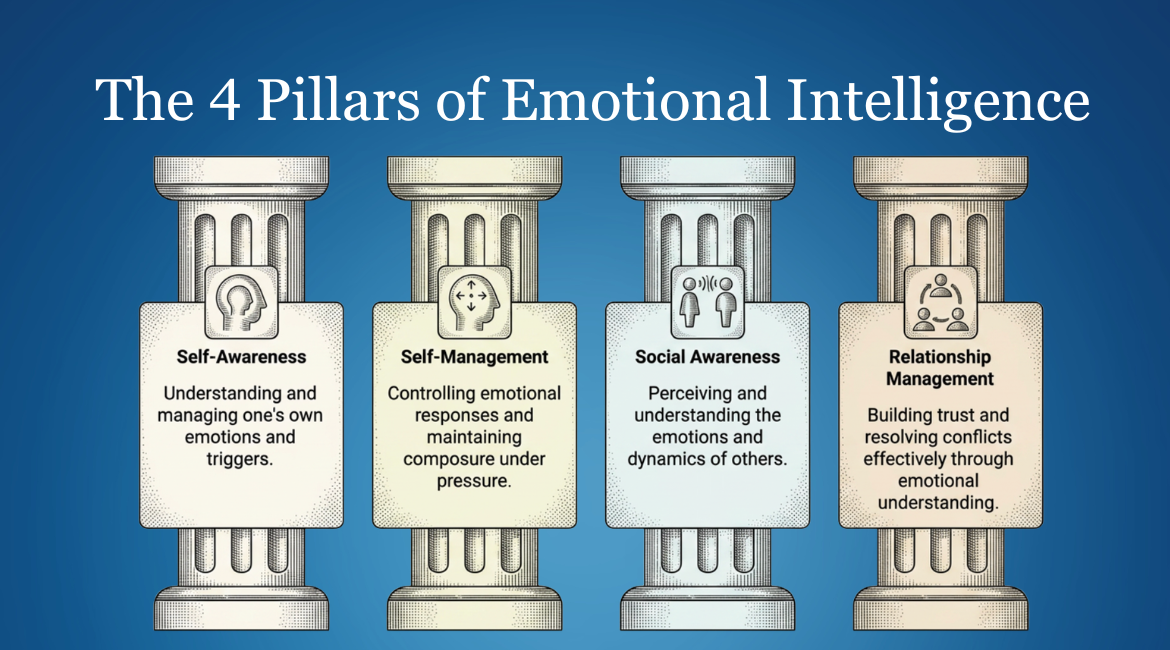
The 4 Pillars of Emotional Intelligence
Emotional intelligence breaks down into four core pillars. Master these, and you will see immediate changes in how people respond to your leadership.
1. Self-Awareness
This is the foundation. You cannot manage what you do not notice. Self-aware leaders know their triggers. They recognize when they are getting defensive, impatient, or overconfident. They understand how their emotions affect their decisions.
I worked with a CEO who realized she became curt when she felt stressed. Her team interpreted this as anger directed at them. Once she recognized the pattern, she started naming it: “I am feeling pressure right now, so if I sound short, it is not about you.” That one shift changed her team dynamics.
Self-awareness is not about being perfect. It is about being honest with yourself about where you are and what you need to work on.
2. Self-Management
Knowing your emotional patterns is step one. Managing them is step two. Self-management is your ability to stay composed under pressure, think before reacting, and choose responses that serve your goals instead of just venting your feelings.
Leaders with strong self-management do not suppress emotions. They process them. They feel frustrated but do not lash out. They feel anxious but do not spiral. They pause, reflect, and respond intentionally.
This is especially critical during crises. Your team will mirror your emotional state. If you panic, they panic. If you stay grounded, they stay grounded. Self-management creates the stability others need to do their best work.
3. Social Awareness
This is your ability to read the room. To notice what is not being said. To pick up on subtle shifts in energy, body language, and tone.
Socially aware leaders ask better questions because they sense what is really going on. They notice when someone is checked out. They recognize tension before it escalates. They understand the dynamics shaping how their team operates.
This is not about being psychic. It is about paying attention. Most leaders are so focused on their own agenda that they miss obvious signals. Social awareness means slowing down enough to notice.
4. Relationship Management
This is where everything comes together. Relationship management is your ability to use emotional intelligence to influence, collaborate, and resolve conflict effectively.
Leaders skilled in relationship management build trust quickly. They give feedback that people actually hear. They navigate disagreements without burning bridges. They inspire commitment, not just compliance.
The key is authenticity. People can tell when you are manipulating them versus genuinely trying to understand them. Relationship management only works when it is rooted in real care for others.
Why EQ Matters More Than Ever in 2026
The traditional command-and-control model of leadership is dead. In 2026, your authority comes from trust, not your title. And trust is built through emotional intelligence.
Remote and hybrid work have made this even more critical. You cannot just walk the floor and sense team dynamics. You need to read emotions through a screen. You need to build connection without physical presence. That requires higher EQ, not less.
Add to this the rising expectations around mental health and well-being. Employees want leaders who see them as whole people, not just productivity machines. They want workplaces that support their growth, not just extract their labor.
Leaders who ignore this are struggling to retain talent. Leaders who embrace it are building cultures where people choose to stay and give their best.
Common EQ Mistakes Leaders Make
Even leaders who value emotional intelligence make predictable mistakes. Here are the big ones:
Confusing Niceness with EQ
High EQ is not about being liked. It is about being effective. Sometimes that means having tough conversations. The difference is doing it with empathy instead of hostility.
Avoiding Conflict
Leaders with high EQ do not run from conflict. They lean into it. They address issues early before they fester. They create space for disagreement without letting it become personal.
Over-Explaining
When someone is upset, your instinct might be to explain why they should not feel that way. This backfires. Validation comes before explanation. Acknowledge what they are feeling first. Then, if needed, provide context.
Ignoring Your Own Needs
EQ is not about self-sacrifice. You cannot pour from an empty cup. Leaders who neglect their own well-being burn out and then bring that stress to their teams. Managing your energy is part of managing your emotions.
How to Develop Your Emotional Intelligence
The good news is that EQ can be developed. It is not a fixed trait. Here is how to strengthen it:
Practice Self-Reflection
Set aside time regularly to review how you showed up. What triggered you? How did you respond? What would you do differently? Journaling works. So does working with a coach.
Ask for Feedback
You cannot see your blind spots alone. Ask people you trust how you come across. What do they notice about your emotional patterns? Where do they see you struggling?
Slow Down
Most EQ mistakes happen when you react too quickly. Build a pause into your process. Take a breath. Count to three. Give yourself a moment to choose your response instead of defaulting to habit.
Study People
Pay attention to how others handle emotions. What works? What does not? Learn from people who navigate difficult situations with grace.
Work with a Coach
If you are serious about developing EQ, get support. A good coach will help you see patterns you cannot see on your own and hold you accountable for practicing new behaviors.
EQ and the 7 Essential Qualities of Great Leaders
When you look at the seven essential qualities of great leaders—vision, resilience, adaptability, humility, integrity, communication, and influence—emotional intelligence runs through all of them.
You cannot have vision without self-awareness. You cannot build resilience without self-management. You cannot adapt without social awareness. You cannot communicate effectively without relationship management.
EQ is the connective tissue that makes everything else work. Technical skills matter. Strategy matters. Execution matters. But without emotional intelligence, you are building on shaky ground.
What Does Leadership Coaching Look Like for EQ Development?
Leadership coaching is one of the most effective ways to develop emotional intelligence. Unlike training, which teaches concepts, coaching creates space for you to practice new behaviors and get real-time feedback.
A good coach will help you identify your emotional patterns, recognize your triggers, and develop strategies for managing them. They will challenge you when you are avoiding difficult conversations. They will celebrate progress when you handle situations better than before.
The goal is not perfection. It is growth. Leadership coaching helps you see where you are, where you want to be, and what specific steps will get you there.
The ROI of Emotional Intelligence
Investing in EQ is not soft. It is strategic. Research shows that leaders with high emotional intelligence drive better team performance, lower turnover, and higher employee engagement.
When people feel understood and valued, they give discretionary effort. They stay longer. They refer great talent. They solve problems instead of waiting to be told what to do.
That is the competitive advantage of emotional intelligence. It unlocks potential in others. And in 2026, that is what separates good leaders from great ones.
Ready to Master EQ?
Take your leadership skills to the next level with our expert-designed courses. Join thousands of leaders transforming their careers.
Share:
In case you missed




Discover
Live Programmes
Work with Us
© 2026 The Skill Bridge, Bangalore 560103 · +91 9731661049
CPD-Approved · IFC GLC Listed · 🏆 Excellence in Leadership Education 2026