

Humility has a reputation problem. People mistake it for weakness. The truth is the opposite. Humble leadership requires tremendous strength. It takes confidence to admit you do not have all the answers.
The 10 Leadership Qualities of Humble Great Leaders
Humble leadership manifests through ten specific qualities: Self-Awareness, Openness to Feedback, Willingness to Learn, Sharing Credit, Taking Responsibility, Empowering Others, Asking Questions, Admitting Mistakes, Putting the Mission First, and Gratitude.
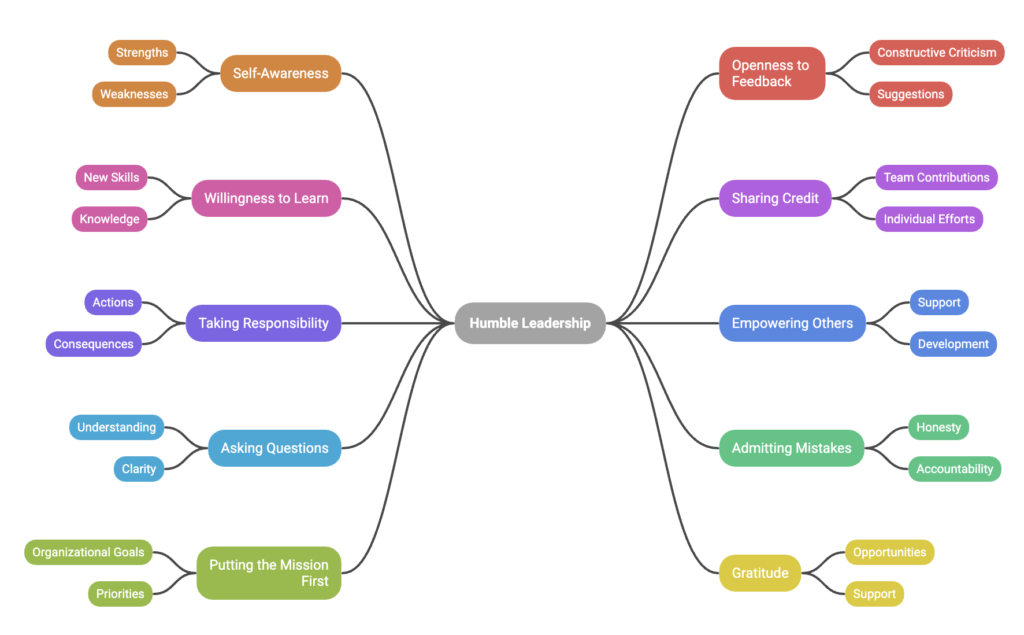
These qualities create psychological safety. When teams see leaders accepting feedback without punishment, admitting mistakes openly, and sharing credit generously, they feel safer offering their own perspectives and taking smart risks.
Common Myths About Humble Leadership
Confidence and humility are not opposites. Humble leaders make tough calls and hold people accountable. What they do not do is lead with arrogance. Firmness and humility coexist.
Seeking input does not mean endless deliberation. Humble leaders gather perspectives efficiently and make decisions decisively.
The Paradox of Humble Leadership
The less you need to prove you are the smartest person in the room, the more effective you become. The more willing you are to admit you do not know, the more people trust you. The more credit you give away, the more respect you earn.
Humility is not weakness. It is the foundation of sustainable leadership. And in a world that rewards authenticity, transparency, and collaboration, humble leaders win.
Ready to Master Humility?
Take your leadership skills to the next level with our expert-designed courses. Join thousands of leaders transforming their careers.